Regenerative farming
Regenerative farming in its true sense means to look at everything as a whole, from our animals, to wildlife, soils, water quality, to our local community, us as farmers and the wider world (among many other things!).
That means that we are constantly learning through experience and from others, being adaptable and doing our best to work alongside natures flows and processes. If we were to keep all our animals outside through winter, in the heart of rainy Devon, with our patchy clay soils, we'd damage our soils so much that many of the elements of the system as a whole would be damaged. It wouldn't be sustainable, let alone regenerative.
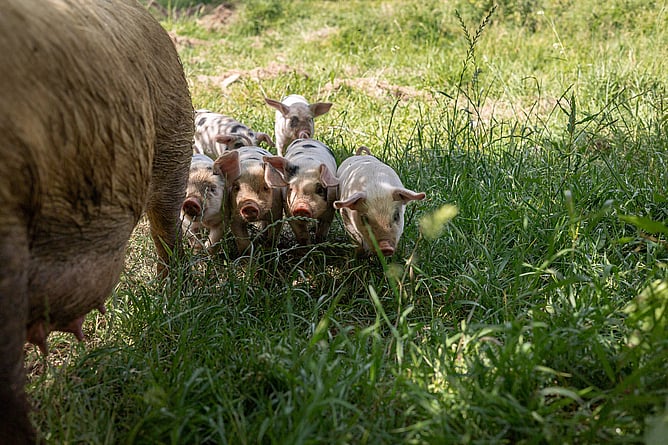
We prioritise the pigs who benefit the most from being outside, which are our mother sows and their young piglets. The piglets need lots of space to explore and the sows need plants to forage to help them feed lots of piglets. The sows also enjoy some peace and quiet while their piglets are off venturing every day.
Entertaining active minds
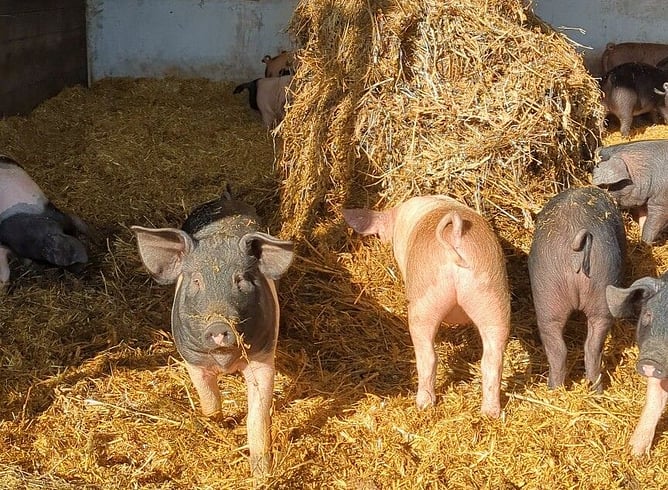
We make sure that our pigs are kept busy if they're inside through winter as they are so clever. They get lots of silage to replace the grass they're missing out on, sprouted grains thrown around for them to snuffle for and lots of fresh straw to plough through and allow them to make their own beds which they love to do. We just put a whole bale in with them and they use their impressive strength to bulldozer their way through it and spread it around!
Future planning
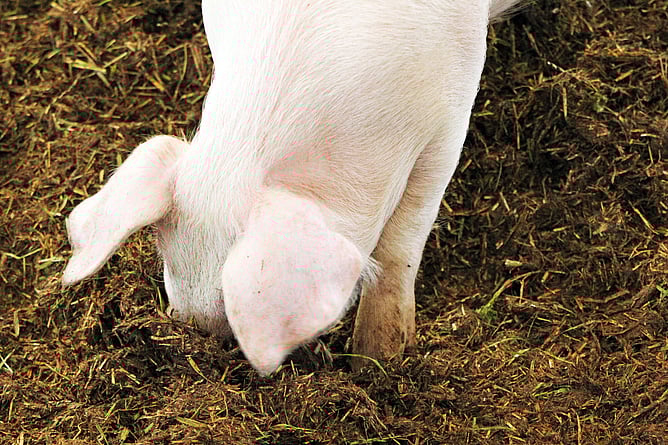
We are slowly working on extending our grazing season through improving our soils, but this is a slow process - and every year is different. We're also looking for more farmers to work with to overwinter our pigs on their fields, for the benefit of all. The pigs provide great fertility and if managed correctly, can help improve soils too. In the meantime, we're working on perfecting our composting methods using pigs. The pigs go into the sheds after the cattle, digging through their dung to find grains we've hidden deep within. While doing so, they're aerating the dung and kickstarting the composting process.
Compost is much better to spread on the fields than dung. Not only does it reduce the quantity and therefore the amount of tractor impact, it also is packed with biology, from countless microorganisms to loads of worms.
Most of our pigs have already gone back out to the pastures, preparing the soils for new seeds to grow to feed them this summer. The last group will be heading back out in the next couple of weeks - let's hope this sunshine lasts!