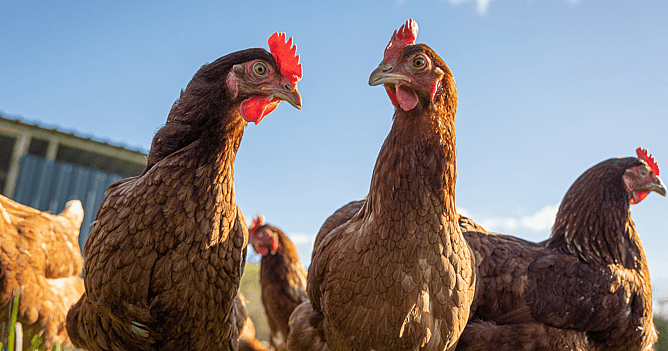
What makes a good egg? Read on as we explain what makes an egg pasture raised & how our hen's lifestyle improves the quality of our eggs, using mostly local soy-free feed for a nutritious egg, without dyes & additives to artificially make the egg 'appear' high quality. We believe, and from the feedback so do many of our customers, that the proof is in the eating of our spectacularly good eggs!
The pasture element
To be truly pasture raised, we believe that means regular moves, at least weekly, into fresh areas. Those areas should contain a variety of different plants, not just grasses. This is what makes it 'pasture', rather than just grass fields. The diversity of plants not only directly provide the hens with a variety of nutrients, it also creates different habitats for insects and more which the hens find and eat.
Admittedly, this isn't always possible when working with degraded land, such as in the photo below. This is when the hens can be used as a part of the regeneration process, managed carefully to improve the soils and therefore the pasture.
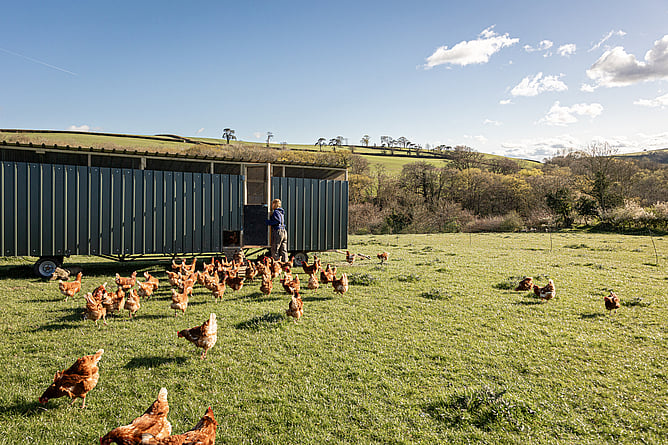
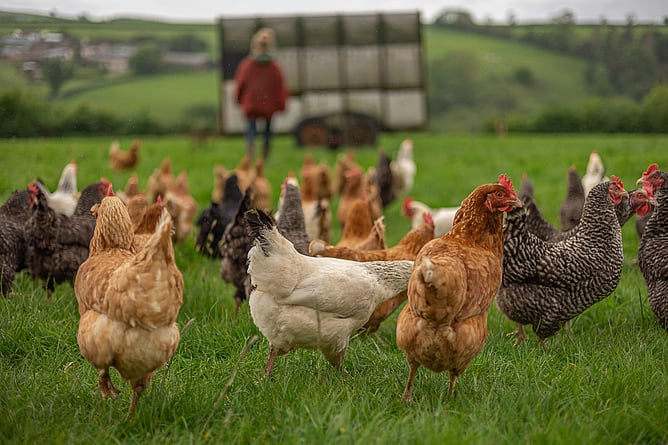
At Redwoods, we move our hens twice a week. They live in small flocks in converted trailers, an easily mobile system to take them all around the farm.
You can tell when they've just been moved by looking at their foraging pattern - they scan the ground quickly as they move around, looking for slugs, insects and worms before they move onto eating the grass. When they've been in an area for a couple of days, they just head straight for the grass once they come outside, as they know they've already had the best stuff!
Our hens have as much access to pasture as possible. Their automatic doors open early in the morning and close as it gets dark in the evening when the hens have gone into their trailers to sleep.
The feed
Poultry are monogastrics (meaning they have one stomach) so unlike ruminants such as cattle or sheep, they can't get all of their nutrient requirements from grass and other pasture plants.
Another important part of being pasture raised in our opinion is that the additional feed fed to hens should be well thought out and sourced responsibly. For us, that means cutting out soya (due to its high food miles and the fact it creates so much deforestation) and replacing it with UK grown protein instead. 70% of our feed currently comes from within 20 miles of the farm and we're continually increasing that amount through working with other local farms.
Our hen feed is made up of wheat, beans, peas, rapeseed meal, with a small amount of additional minerals and proteins, such as a maize derived protein. There are no dyes or additives in their feed, which are used in some feeds to dye the egg yolk a brighter orange colour.
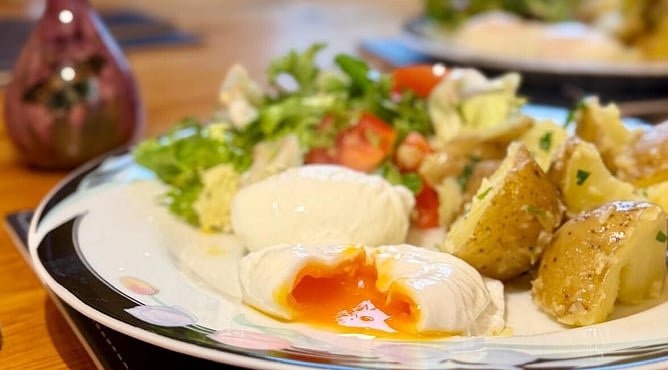
You'll notice a more gentle, natural orange in our egg yolks. This colour comes from the variety of plants that our hens eat. An orange pigment called carotene in the plants both dyes the yolk and increases the nutritional quality of the egg.